

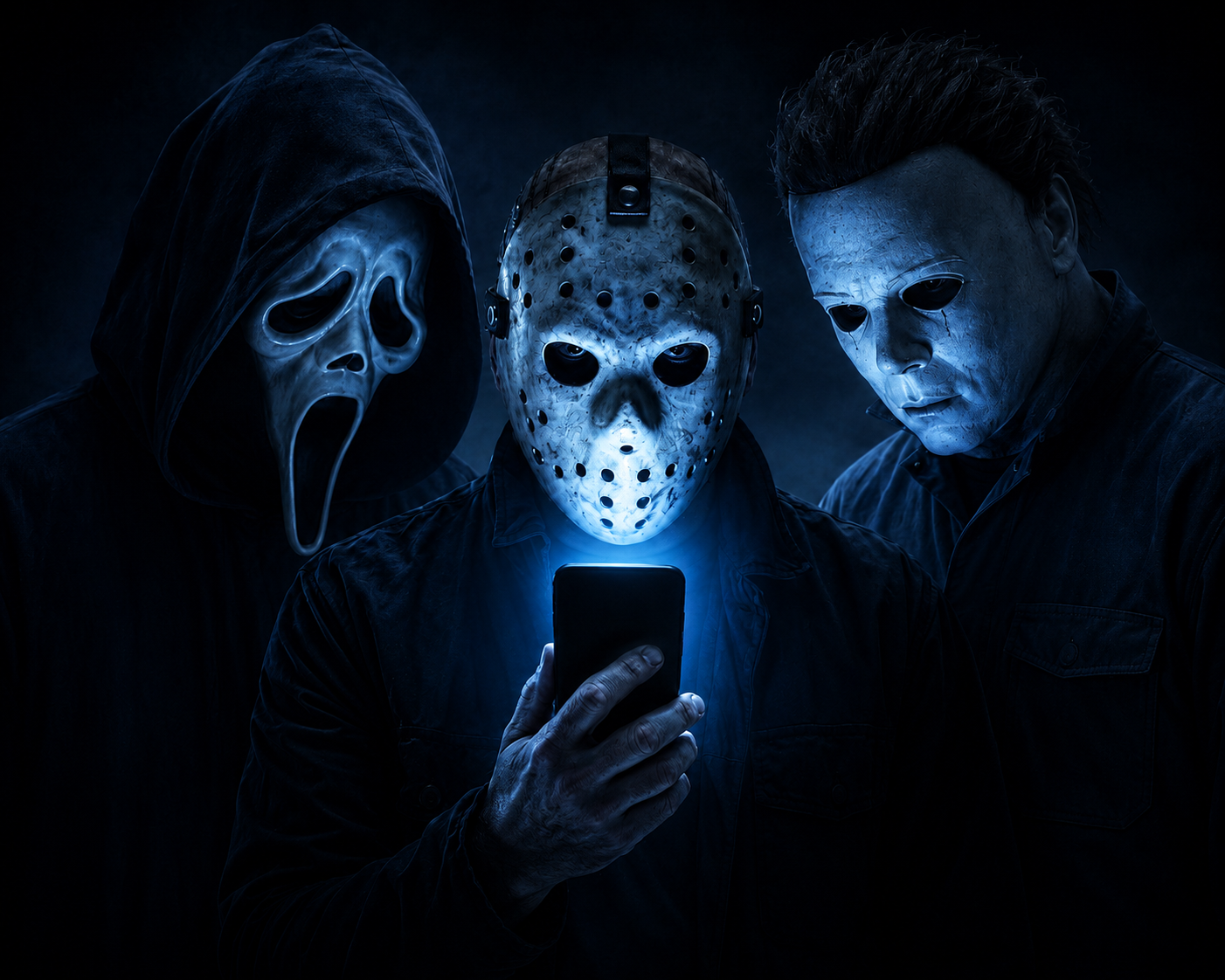
Consider what it actually takes to scare someone in 2026. Not startle them — anyone with a jump-cut and a well-placed music sting can do that. To genuinely scare them. To make them feel, as the credits roll, that something has shifted slightly inside them and isn't entirely coming back.
The studios have largely stopped trying. They've gotten very good at something else: packaging the promise of fear. A recognizable title. A returning face. A recycled mythology. A trailer built around the memory of a better film. The machine knows how to brand horror, sequel it, and sell it back to an audience that already has some emotional connection to the name on the poster. What it struggles to do — far too often, with far too much money — is surprise us.
That's why the current surge of outsider horror directors matters. Not because they're young, though many of them are. Not because they came from YouTube, though several of them did. The real reason is simpler and harder to market: they arrived without the franchise machine's most crippling instinct, which is protecting intellectual property before disturbing an audience.
They learned rhythm, tension, image-making, and dread in less protected spaces. They made things — sometimes crude, chaotic, imperfect things. But things with a pulse. And in horror, that's the ballgame.
Horror runs on instinct. It depends on timing, atmosphere, silence, and the precise sense that something has gone wrong in a way the viewer can't quite name. You can have all the money in the world and still miss it. You can bring back every legacy character on your studio's roster and still confuse recognition with fear.
*
Oz Perkins, Demián Rugna, Jordan Peele, Ari Aster, Damian McCarthy, Robert Eggers — they share almost nothing in background or temperament. Some came through comedy, some through art-house cinema, some through international genre filmmaking. What connects them isn’t a platform. It’s an instinct. They're not treating horror as a brand-management exercise. They're treating it as a feeling. A dare.
And then there's the question of payoff.
Because different isn't enough. That's where conversations about internet-era horror get dangerously comfortable — anything strange or minimal gets praised as evolution. But an experiment isn't automatically a film. A concept isn't automatically an experience. Atmosphere isn't automatically entertainment.
Skinamarink is the cautionary example. It was undeniably committed, and it understood something true about childhood dread — the uncanny quality of being awake at midnight in rooms that seem to change shape, stairwells that feel slightly longer than they should. That's real territory. But the film ultimately chose mood over momentum, demanding the viewer's patience rather than earning it. Horror can be slow. It can be abstract. It still has to build toward something.
The films that show where horror is actually headed — Bring Her Back, Backrooms, Obsession, Weapons — aren't just different from the studio formula. They understand why the formula went stale, and they offer something in its place.
*
Bring Her Back is the sharpest example. Danny and Michael Philippou could have followed Talk to Me by chasing scale and franchise mythology. Instead, they went more intimate and nastier — a film so physically and emotionally invasive it plays less like horror than like grief given a body. You don't just watch what happens to the characters. You feel it locate something unresolved in yourself.
The Philippous matter because they show what happens when outsider instincts mature without becoming restrained. Their background in online filmmaking gave them a sense of impact and audience psychology. Bring Her Back proves they've moved past viral thinking entirely. They understand control. They understand escalation. They understand that the shocking image is nothing without the emotional pressure that makes it impossible to shake.
Backrooms is a different beast. Kane Parsons came from one of the purest internet horror pipelines imaginable: a digital myth, a liminal image, a shared online nightmare that grew without studio permission. The Backrooms — fluorescent lights, stained carpet, endless empty corridors — were never just a setting. They were a feeling: the architecture of modern life stripped of purpose, familiar enough to recognize and wrong enough to reject.
What Parsons understood is that this particular terror isn't about what might be hiding around the corner. It's that the corner keeps going. It's the horror of systems without exits, spaces designed for use and then hollowed out. That fear has no precedent in the old franchise playbook. It comes from the internet's specific ability to transform a single image into folklore — and folklore into dread.
Obsession finds something smaller and uglier. Curry Barker's film follows desire as it curdles into entitlement. The premise has the shape of a dark fairy tale, but the anxiety underneath it is entirely contemporary — about wanting someone so badly that love becomes ownership, about the childishness that can sit at the center of adult obsession. At its best, this kind of outsider horror finds terror not in grand mythology but in intimate emotional distortion, followed until it becomes monstrous.
Weapons completes the picture. Zach Cregger's route to horror ran through sketch comedy and social media, and you feel that training in the film's timing and tonal control. But what distinguishes Weapons isn't the jokes. It's how confidently the film uses comedy as misdirection rather than relief. The laughs don't puncture the dread — they sharpen it, making the characters feel more human, the rhythms more unpredictable, the horror more volatile when it finally turns.
Bad horror-comedy uses jokes as a pressure valve. Weapons uses them as destabilization. The audience laughs without ever fully relaxing. That balance matters. Sometimes the joke is exactly what makes the fall feel steeper.
Chris Stuckmann's Shelby Oaks deserves a mention too. His move from YouTube critic to filmmaker is part of the same industry story, and it's worth crediting simply as an act of nerve. It's one thing to build a career analyzing what horror gets wrong. It's another to step in front of the same scrutiny and make a real feature in one of the hardest genres to control.
*
The strongest recent outsider horror isn’t interesting simply because of where its directors came from. It's interesting because of what they're refusing to repeat.
Hollywood horror has become extraordinarily comfortable with repetition. The legacy sequel is now the dominant studio reflex: resurrect the title, bring back a familiar face, introduce a younger cast, wink at the audience, and hope that nostalgia fills the gap where invention should be. Sometimes it works commercially. Franchises can evolve — familiar mythology can still cut deep when a filmmaker finds a genuine reason to reopen the wound. But too often, the current model seems to be asking audiences to applaud the return of the title before the movie has earned anyone's fear.
The recent attempt to revive I Know What You Did Last Summer is a useful case study. It arrives carrying history, recognition, built-in awareness. What it can't quite locate is necessity. A horror revival doesn't have to justify itself explicitly — but it has to make the return feel inevitable rather than managed. This one feels managed.
Scream 7 has the more interesting problem. The franchise began as a blade pressed against horror cliché — self-aware, formally clever, genuinely dangerous. That intelligence can't sustain indefinitely. A franchise built on dissecting formulas eventually risks becoming one. The commentary folds in on itself. The mask returns. The marketing promises that this time, the old thing will feel new. At a certain point, the film commenting on the machine and the machine become indistinguishable.
Horror can't survive on recognition. The genre needs filmmakers willing to risk failure — people who understand that fear changes with the culture, that what scared audiences in 1997 isn't what scares them now, and that what felt transgressive thirty years ago may now feel safely displayed behind glass.
*
Horror is built on inheritance. Every ghost story carries the bones of older ones. Every slasher owes something to the campfire tale. Every possession film still lives in the shadow of The Exorcist. The past matters. The great horror filmmakers know how to receive it — to run new blood through old fears — without being buried by it.
What this outsider moment represents isn't the arrival of YouTube. It's the latest version of a correction the genre has always needed: pressure from the margins. Low budgets. Strange obsessions. Technical limitations. International perspectives. Artists who weren't trained to ask permission before making something that unsettles. Some of it will fail. Some will confuse obscurity with depth, or mistake a good idea for a finished film. That's the cost of risk.
The alternative is worse: a genre trapped in its own merchandise, endlessly reviving names that once meant something without asking why they mattered — or whether they still do.
Horror doesn't need to abandon Hollywood, or reject franchises, or demand that every film arrive from the internet. It needs friction. Voices that weren't built in the same rooms, by the same notes, chasing the same demographic memory.
At their best, these filmmakers remember something the franchise machine keeps forgetting: horror isn't supposed to feel preserved.
It's supposed to feel alive.
